Coercive Control
Psychological Kidnapping Through Grooming and Coercive Persuasion: Adolescent Pregnancy, Developmental Trauma, and Adult Recovery
November 26, 2026 · 18 min read · Soteldo Psychotherapy Clinic
Abstract
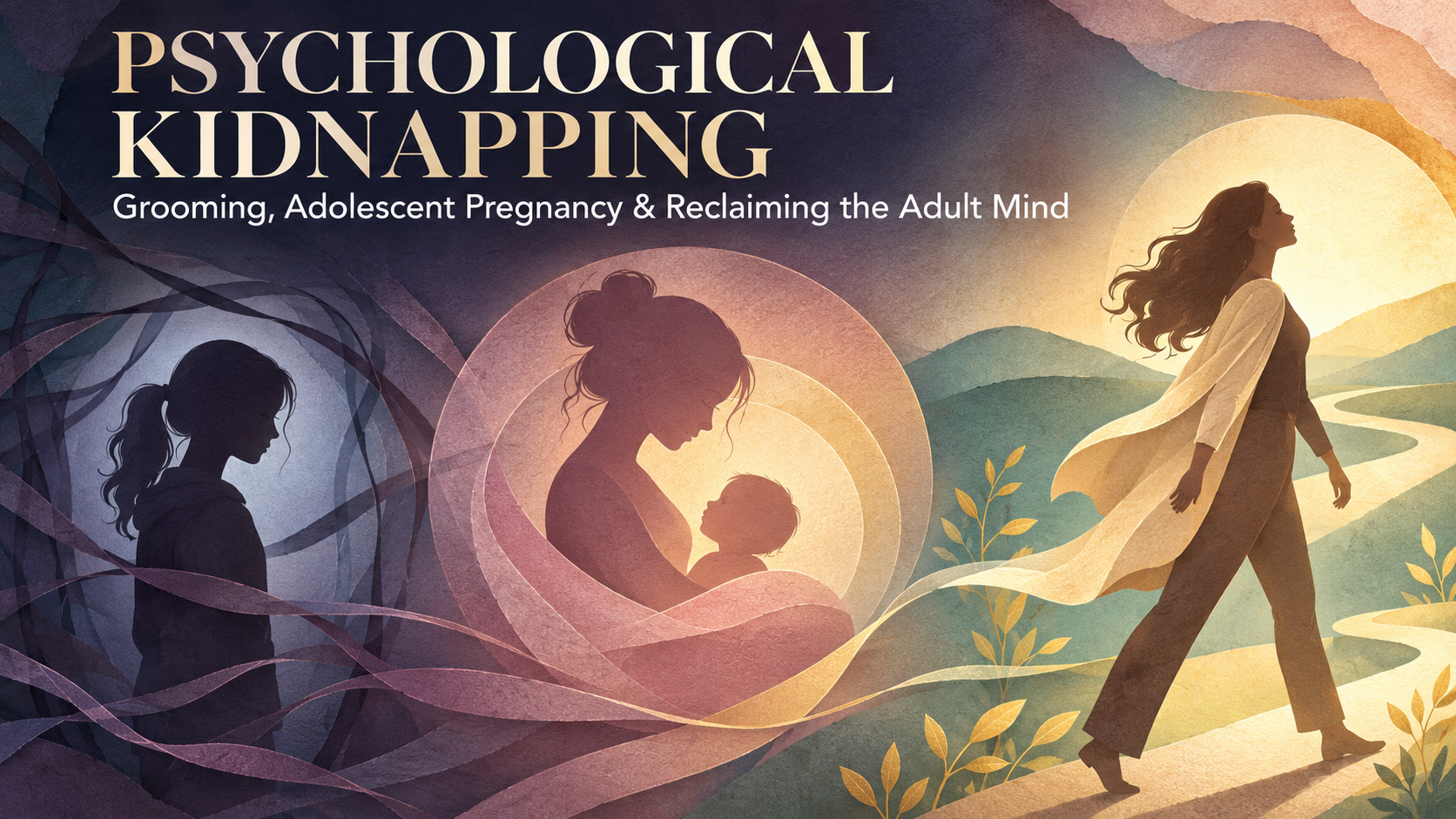
Sexual and relational grooming of an adolescent by an adult can create a form of psychological captivity in which affection, persuasion, secrecy, dependency, and coercive control progressively reorganize the young person’s identity and social world. Although psychological kidnapping is not a formal diagnostic or legal term, it may function as a clinically meaningful metaphor for the appropriation of an adolescent’s attachment system, autonomy, reality testing, and developmental trajectory. This article examines the grooming of girls between 14 and 16 years of age by adult men, with particular attention to adolescent pregnancy, reproductive coercion, prenatal stress, and long-term recovery following separation. A biopsychosocial and developmental-trauma framework is used to examine how grooming may exploit normative adolescent needs for belonging, validation, identity formation, and romantic attachment. Pregnancy during adolescence may intensify entrapment through biological vulnerability, accelerated caregiving responsibilities, financial dependency, stigma, and permanent relational ties to the adult. Chronic stress may also affect the adolescent’s hypothalamic–pituitary–adrenal axis, although trauma is not associated with one uniform cortisol profile. Prenatal distress may influence aspects of fetal neurodevelopment, but these associations are probabilistic rather than deterministic and should never be used to blame the adolescent mother. Adult recovery is conceptualized not as literal “deprogramming,” but as a gradual process of establishing safety, restoring developmental context, reassigning responsibility, integrating traumatic attachment, and rebuilding autonomous identity.
Keywords: adolescent grooming, coercive persuasion, child sexual exploitation, adolescent pregnancy, reproductive coercion, cortisol, developmental trauma, coercive control
Psychological Kidnapping as a Clinical Metaphor
The term psychological kidnapping is not recognized as a diagnosis in the Diagnostic and Statistical Manual of Mental Disorders or the International Classification of Diseases. Nevertheless, it can serve as a clinical metaphor for a process in which one person progressively captures another person’s emotional loyalties, self-concept, perceptions, and capacity for autonomous decision-making. Unlike physical kidnapping, psychological captivity may occur without confinement. The adolescent may continue attending school, communicating with family, or appearing to participate voluntarily while her internal world becomes increasingly organized around the adult.
When an adult man initiates a romantic or sexual relationship with a girl between 14 and 16 years of age, the developmental and relational asymmetry is clinically significant. The adult ordinarily possesses greater sexual experience, financial access, mobility, social authority, and knowledge of interpersonal influence. By contrast, the adolescent is still developing identity, emotional regulation, future-oriented reasoning, relational expectations, and the capacity to recognize subtle exploitation. Adolescence is a period of meaningful competence, but it is also characterized by continuing maturation of executive functioning and heightened sensitivity to social reward, acceptance, exclusion, and attachment (Sawyer et al., 2018).
The characterization of a teenager as “mature for her age” may itself become part of the grooming process. It flatters the adolescent while concealing the adult’s responsibility to maintain an appropriate boundary. The young person’s emerging independence is reframed as evidence that she is developmentally equivalent to the adult. In this way, an actual power imbalance is converted into a romantic narrative of exceptional maturity and mutual choice.
Clinical literature describes grooming as a process involving lure, inducement, emotional manipulation, attention, secrecy, boundary erosion, and the strategic withdrawal or restoration of affection (Choudhary et al., 2019). Adolescents may be particularly vulnerable to emotional inducements because romantic attachment, sexuality, autonomy, and identity are prominent developmental concerns during this period. Consequently, adolescents who have been groomed may defend the adult, minimize the age and power imbalance, or reject the characterization of the relationship as abusive (Choudhary et al., 2019).
These reactions should not be interpreted as proof that exploitation did not occur. Instead, they may reflect the psychological effectiveness of grooming. A central feature of grooming is that overt force may become unnecessary once the adolescent has internalized the relationship’s rules.
Grooming as Coercive Persuasion
Grooming is not adequately defined by a single sexual act or explicit threat. It is a relational process through which trust and attachment are developed, sexual and interpersonal boundaries are gradually altered, and resistance becomes increasingly costly. The adult may initially position himself as a protector, confidant, mentor, rescuer, or uniquely understanding partner.
The early stages may feel beneficial to the adolescent. She may receive sustained attention, validation, gifts, transportation, financial assistance, protection, or escape from conflict elsewhere in her life. These benefits are not incidental. They can create the emotional credibility required for later exploitation.
A grooming trajectory may include:
• Identification of unmet attachment or material needs
• Intensive attention and idealization
• Claims that the adolescent is unusually mature
• Progressive secrecy
• Gradual sexualization
• Testing and crossing boundaries
• Isolation from peers, family members, or professionals
• Alternation between affection and withdrawal
• Creation of emotional, financial, sexual, or reproductive dependency
• Induction of guilt, shame, and responsibility
• Threats of abandonment, exposure, punishment, or self-harm
• Reinterpretation of exploitation as mutual love
The persuasive dimension of grooming does not make the process benign. Persuasion can become coercive when it occurs within a substantial power imbalance and when the more powerful individual deliberately narrows the other person’s perceived choices. The adolescent may technically be able to say no while experiencing refusal as a threat to her safety, belonging, housing, family structure, or sense of identity.
The appropriate clinical question is therefore broader than whether the adolescent expressed agreement. Assessment should examine how that agreement was produced, what alternatives she believed were available, how disagreement was treated, and whether the adult used developmental vulnerability to secure compliance.
The Adolescent’s Subjective Experience
A groomed adolescent may not experience herself as a victim. She may believe that she has discovered an unusually profound form of love. The adult may appear to provide a secure base, particularly if the adolescent has experienced family conflict, emotional neglect, social rejection, prior trauma, poverty, or unstable caregiving.
The relationship may meet several developmental and psychological needs simultaneously:
• The need to feel chosen
• The desire to be treated as an adult
• The search for identity and belonging
• Protection from loneliness or instability
• Escape from family conflict
• Sexual and romantic validation
• Material or financial security
• The fantasy or promise of an intact family
The presence of affection does not negate exploitation. A young person can feel genuine love while being groomed. Similarly, she may actively seek contact, conceal the relationship, or return after conflict without possessing equal power within it. Grooming frequently produces the very behaviours later cited as evidence that grooming did not occur.
This creates a complex traumatic attachment. The same individual may become associated with comfort and danger, validation and humiliation, protection and control. The adolescent may turn toward the adult for relief from distress that the adult has helped create. Over time, the attachment can become self-reinforcing.
The relationship may also reorganize the adolescent’s social reality. Protective adults can be portrayed as controlling, jealous, or incapable of understanding the relationship. The adolescent may gradually adopt the groomer’s account of events, including the belief that disclosure would betray him, destroy the family, or prove that she is immature. Psychological captivity is strengthened when external control becomes internalized self-surveillance.
Adolescent Pregnancy as a Developmental and Traumatic Event
Pregnancy during adolescence is not inherently traumatic, and adolescent mothers should not be pathologized. Nevertheless, pregnancy occurring within a groomed relationship may intensify pre-existing exploitation and accelerate developmental demands before the adolescent has adequate emotional, social, or financial resources.
The adolescent is simultaneously undergoing her own neurological, psychological, and social development while experiencing pregnancy, childbirth, and the transition to parenting. She may be expected to perform an adult maternal role while still requiring developmentally appropriate protection and caregiving herself.
Adolescent pregnancy is associated with increased medical and psychosocial vulnerability. Adolescent mothers face greater risks of certain obstetric complications, while their infants face increased population-level risks of preterm birth, low birth weight, and serious neonatal conditions (World Health Organization [WHO], 2024). These outcomes are influenced by multiple interacting factors, including access to prenatal care, nutrition, poverty, violence, stigma, educational disruption, substance exposure, and the quality of social support. Maternal age alone should not be treated as a complete causal explanation.
Pregnant and postpartum adolescents may also experience substantial mental-health needs. A large Ontario population-based cohort study found that adolescents had higher rates of psychiatric diagnoses during pregnancy and the first postpartum year than adults. Adolescents also had markedly higher risks of psychiatric emergency-department visits, psychiatric hospitalization, and self-injury (Bailey-Scott et al., 2026). These findings identify a need for targeted support; they do not establish that every adolescent pregnancy will result in psychiatric illness.
Pregnancy within a groomed relationship may provoke contradictory emotions. The adolescent may love and want her child while simultaneously experiencing fear, bodily loss of control, shame, social isolation, or grief about the circumstances of conception. These emotional states should not be reduced to a binary assumption that the pregnancy was either entirely wanted or entirely unwanted.
A trauma-informed formulation must permit complexity: the child may be deeply loved, while the conditions surrounding conception, pregnancy, and birth remain coercive or traumatic.
Reproductive Coercion and the Consolidation of Control
Pregnancy may also occur within a context of reproductive coercion. Reproductive coercion refers to behaviours that interfere with a person’s reproductive autonomy. These behaviours may include contraceptive sabotage, pregnancy pressure, forced sexual activity, interference with health care, or attempts to control the outcome of a pregnancy.
Within an adult–adolescent relationship, reproductive coercion may include:
• Refusing to use contraception
• Removing or damaging condoms
• Interfering with birth-control use
• Monitoring menstruation or fertility
• Pressuring the adolescent to become pregnant
• Describing pregnancy as proof of love or maturity
• Threatening abandonment if she does not continue the pregnancy
• Pressuring or forcing her to terminate a pregnancy
• Preventing access to reproductive health care
• Using the pregnancy or child to prevent separation
• Threatening custody consequences if she discloses the relationship
Pregnancy can consolidate dependency by creating an enduring connection between the adolescent and the adult. The young person may leave school, lose peer relationships, become financially dependent, or move away from protective family members. Parenting responsibilities can also reduce opportunities for education, employment, and independent identity development.
After separation, the shared child may provide an avenue for continued monitoring, harassment, litigation, intimidation, or forced contact. Therefore, ending the romantic relationship does not necessarily end the coercive system.
The Biological Dimension: Stress, Cortisol, and the Adolescent Body
Chronic grooming and coercive control may affect biological stress-regulation systems, particularly the autonomic nervous system and hypothalamic–pituitary–adrenal axis. When threat is perceived, the hypothalamus releases corticotropin-releasing hormone, the pituitary gland releases adrenocorticotropic hormone, and the adrenal glands release cortisol. Cortisol helps mobilize energy and supports adaptive responses to danger.
Cortisol should not be described solely as a harmful “stress hormone.” It is essential to metabolism, immune function, circadian regulation, and normal fetal maturation. The clinical concern is not the presence of cortisol itself, nor is it an adolescent’s occasional experience of distress. The concern is prolonged or repeated activation without sufficient recovery, particularly when it occurs alongside violence, sleep disruption, deprivation, substance exposure, or inadequate health care.
Trauma is not associated with a single cortisol pattern. A systematic review and meta-analysis of 129 studies found that childhood adversity was associated with modest alterations in certain aspects of HPA-axis functioning, including higher afternoon cortisol, a flatter diurnal slope, blunted stress reactivity, and higher hair cortisol concentrations. However, adversity was not significantly associated with every cortisol indicator, including morning cortisol, total daily output, cortisol awakening response, or cortisol recovery (Niu et al., 2025).
These findings challenge the oversimplified claim that trauma always produces “high cortisol.” Depending on the developmental stage, chronicity of exposure, current symptoms, biological adaptation, sleep, medication, and measurement method, a survivor may demonstrate elevated, blunted, poorly timed, or apparently typical cortisol activity.
Longitudinal research involving women with confirmed histories of childhood sexual abuse also suggests that HPA-axis attenuation may be associated with different posttraumatic-stress trajectories across adulthood. Greater attenuation was associated with increased likelihood of persistent posttraumatic symptoms in one prospective study (Swerbenski et al., 2026). Such findings support a developmental model in which chronic stress may initially produce activation and later contribute to altered or blunted responsivity.
Cortisol findings are group-level associations rather than individual diagnostic markers. A single salivary, serum, urinary, or hair cortisol result cannot demonstrate that grooming occurred, establish the severity of trauma, or determine a survivor’s prognosis.
Prenatal Stress and the Developing Fetal Brain
Discussion of the “formation of the unborn child’s mind” requires scientific precision. A fetus does not have a fully developed personality, autobiographical identity, or adult-like psychological mind. Prenatally, foundational structures and regulatory systems are developing, including the brain, autonomic nervous system, sensory systems, endocrine pathways, and stress-response mechanisms.
The prenatal environment involves continuous interactions among maternal health, placental functioning, nutrition, infection, inflammation, substance exposure, medication, stress physiology, genetics, and environmental conditions. The placenta regulates fetal exposure to maternal biological signals and provides substantial protection; however, this protection is not absolute.
Prenatal maternal distress has been associated with differences in fetal and infant brain structure and function. In a systematic review of 71 neuroimaging studies, Mandl et al. (2024) found that prenatal anxiety, stress, and depression were associated with differences involving the limbic system, prefrontal cortex, insula, hippocampus, and amygdala. These regions are involved in emotion, memory, salience detection, regulation, and stress responsivity.
The hippocampus, amygdala, and prefrontal cortex contain glucocorticoid receptors and participate in stress regulation. Accordingly, researchers have proposed that prenatal exposure to distress-related biological signals may contribute to adaptive changes in these developing systems (Mandl et al., 2024). Such adaptation may affect later susceptibility to emotional or behavioural difficulties, but it does not determine a child’s eventual personality or mental health.
Several limitations are essential. Much of the research is observational, and prenatal distress is frequently correlated with poverty, violence, inadequate health care, poor sleep, substance exposure, obstetric complications, and postnatal adversity. Therefore, it is difficult to isolate stress as a single causal variable. Studies also differ in how distress is measured, when it is assessed, and which neurodevelopmental outcomes are examined (Mandl et al., 2024).
Preliminary research involving Brazilian adolescent mothers found associations between trauma exposure and aspects of maternal and infant postnatal cortisol regulation. However, the investigators emphasized the preliminary nature of the findings and the need to examine both prenatal and postnatal pathways (Wiley et al., 2025). The caregiving environment after birth—including safety, responsiveness, stability, nutrition, health care, and social support—remains highly influential.
Prenatal stress research must not be used to blame adolescent mothers for their children’s later difficulties. The adolescent experiencing grooming or coercive control is not the source of the danger. Responsibility belongs to the person inflicting the abuse and to systems that fail to provide protection. Prenatal associations represent possible increases in susceptibility, not irreversible neurological damage.
The Psychological Dimension: Attachment, Identity, and Traumatic Meaning
The psychological consequences of grooming may continue long after the survivor has physically left the relationship. Because the relationship occurred during identity formation, the adult’s interpretations may become incorporated into the survivor’s self-concept.
Potential consequences include:
• Posttraumatic stress symptoms
• Dissociation or emotional numbing
• Depression and anxiety
• Shame and self-blame
• Confusion about consent
• Impaired trust in personal judgment
• Fear of disagreement or abandonment
• Difficulty distinguishing care from control
• Sexual distress or disconnection from the body
• Grief concerning a lost adolescence
• Persistent attachment to the perpetrating adult
• Identity organized around motherhood or partnership
• Fear of autonomous decision-making
Recognition of exploitation may be delayed. As an adult, the survivor may gain the developmental perspective necessary to understand that the relationship was unequal. She may then reinterpret experiences previously labelled as romance, rescue, or mutual rebellion.
This reinterpretation can produce a second crisis. The survivor may need to reconsider the history of her relationship, the circumstances of pregnancy, the meaning of consent, and the narrative she has told herself or her child. She may also grieve the protection she did not receive from adults and institutions.
Delayed recognition does not make the later interpretation unreliable. It may reflect the survivor’s increased developmental capacity to contextualize the relationship.
The Social Dimension: Isolation, Stigma, and Structural Dependency
The effects of grooming extend beyond individual psychology. The adolescent’s education, friendships, housing, finances, family relationships, and employment trajectory may be reorganized around the adult relationship.
Pregnancy and parenting can intensify this restructuring. The adolescent may leave school, become economically dependent, lose contact with peers, or be treated socially as an adult because she is pregnant. However, assuming an adult caregiving role does not erase her developmental need for protection.
Social responses can compound the harm. Statements such as “She knew what she was doing” or “She stayed with him” disregard the effects of developmental inequality, attachment, dependency, reproductive coercion, and fear. These responses may reinforce the groomer’s narrative that outsiders are punitive and cannot be trusted.
Institutional responses may also fail when they focus exclusively on physical violence. Grooming frequently operates through affection, persuasion, economic support, secrecy, and emotional dependency. The absence of visible injuries does not establish the presence of free and equal consent.
A biopsychosocial formulation must therefore include social determinants and structural barriers such as poverty, housing insecurity, stigma, inaccessible reproductive care, educational disruption, legal vulnerability, and inadequate child care.
Leaving and the Persistence of Internalized Control
Physical separation does not automatically end psychological captivity. The adult’s messages may persist as internalized beliefs:
• No one else will love me.
• I caused the relationship.
• I was mature enough to consent.
• I will fail without him.
• Leaving means destroying my family.
• I am responsible for protecting him.
• My child will blame me.
• Other people cannot understand what we shared.
These beliefs may have been repeated during a highly formative period. As a result, they can feel like objective truths rather than learned interpretations.
The survivor may continue anticipating the groomer’s reactions even when he is not physically present. She may experience guilt after setting boundaries, anxiety when making independent decisions, or a sense of emptiness when conflict is absent. Familiar instability may feel more psychologically predictable than unfamiliar safety.
Such responses do not demonstrate a wish to be abused. They reflect learned survival strategies and the persistence of traumatic attachment.
Adult Recovery: From “Deprogramming” to Integration
The term reprogramming communicates the survivor’s experience of having been conditioned. However, it may imply that the survivor’s mind was passively erased or that recovery requires replacing one imposed belief system with another. A more clinically appropriate formulation is integration, relearning, and reclamation.
Recovery involves helping the adult survivor understand how her beliefs and behaviours developed, restore accurate responsibility, and establish an identity that is not organized around the groomer.
### Establishing safety
Recovery is constrained while coercion remains active. Safety may require domestic-violence services, reproductive health care, financial planning, protected communication, digital-security measures, legal consultation, housing assistance, and parenting support. If a shared child creates ongoing contact, intervention may also need to address post-separation coercive control.
### Restoring developmental context
The survivor may need help differentiating adolescent behaviour from adult responsibility. She may have communicated voluntarily, concealed the relationship, or returned to the adult; however, the adult remained responsible for maintaining boundaries and not exploiting a minor.
A developmentally informed formulation does not deny the adolescent’s agency. It places that agency within the unequal conditions in which it was exercised.
### Reassigning responsibility
Self-blame often functions as an illusion of control. Believing “I caused it” may feel less frightening than recognizing that a trusted adult deliberately manipulated a young person. Therapy can help the survivor distinguish participation from equal responsibility and attachment from informed consent.
### Integrating traumatic attachment
The survivor should not be required to deny that she loved the adult. A more integrative formulation may be: “My feelings were real, and the relationship was exploitative.” Holding both realities can reduce shame and prevent treatment from reproducing coercion by dictating what the survivor must feel.
### Grieving interrupted development
The survivor may grieve education, friendships, sexual autonomy, identity exploration, family protection, or years spent in premature caregiving. This grief is not self-indulgent. It is part of reconstructing a developmental narrative that was interrupted by adult demands.
### Rebuilding bodily safety
Body-based recovery may include sleep stabilization, medical assessment, nutrition, paced breathing, grounding, movement, and attention to sexual and reproductive health. These interventions may support nervous-system regulation, but clinicians should avoid unsupported claims that a technique can instantly “reset cortisol” or release trauma from the body.
### Revising internalized beliefs
Cognitive and narrative exploration may examine questions such as:
• How old was I when I learned this belief?
• Whose voice does it resemble?
• What happened when I disagreed with him?
• What did compliance help me survive?
• Which choices were realistically available to me?
• What would I say to another 14-year-old in the same situation?
• What conditions are required for meaningful consent?
• Which aspects of my identity existed before or outside the relationship?
### Trauma processing
Evidence-informed trauma therapies may be considered when the survivor has sufficient safety, stabilization, and choice. Depending on assessment and preference, treatment may include trauma-focused cognitive behavioural approaches, cognitive processing therapy, eye movement desensitization and reprocessing, narrative approaches, or phase-oriented treatment for complex trauma.
Treatment should not require repeated disclosure, impose a predetermined interpretation, or pressure the survivor to confront traumatic memories before adequate stabilization. Restoring autonomy must be part of both the content and process of therapy.
### Reclaiming relational agency
Recovery is demonstrated not only by reduced symptoms but also by an increased capacity to identify preferences, tolerate disagreement, set boundaries, recognize coercive patterns, and experience intimacy without surrendering autonomy. Repeated experiences of safe choice can gradually weaken the groomer’s internalized authority.
Implications for Clinical Practice
Clinicians should avoid framing the survivor as naïve, complicit, or psychologically defective. Assessment should explore the relationship’s developmental context, the adult’s grooming strategies, reproductive coercion, pregnancy experiences, current contact, parenting-related control, and the survivor’s own interpretation.
Important areas of assessment include:
• Age and developmental stage when contact began
• The adult’s age, authority, and access to resources
• How secrecy was introduced and maintained
• Responses to the adolescent’s boundaries
• Isolation from family and peers
• Sexual and reproductive coercion
• Circumstances surrounding pregnancy
• Educational and financial disruption
• Current safety and post-separation contact
• Trauma symptoms, dissociation, and somatic distress
• The survivor’s relationship with her child
• Shame, grief, and delayed recognition
• Cultural, family, spiritual, and community meanings
Clinicians should also avoid presuming that every aspect of the survivor’s motherhood is traumatic. Her relationship with her child may represent love, meaning, strength, and survival. The goal is to distinguish the child’s value from the coercive circumstances that may have surrounded conception, pregnancy, or parenting.
Conclusion
Psychological kidnapping offers a metaphor for the way grooming can capture an adolescent’s emotional world without physical abduction. Through affection, persuasion, secrecy, isolation, dependency, and coercive control, an adult may shape the young person’s understanding of love, consent, loyalty, and identity.
Pregnancy can intensify this captivity by creating biological vulnerability, premature caregiving demands, financial dependency, and a potentially lifelong connection to the adult. Chronic stress may become biologically embedded through changes in stress-regulation systems, but no single cortisol pattern defines trauma. Prenatal distress may influence developing neurobiological systems, but it does not determine a child’s future and should never be used to blame the adolescent mother.
Adult recovery is not the erasure of the adolescent self. It is the process of understanding how that young person adapted, returning responsibility to the adult who exploited the developmental imbalance, and rebuilding an autonomous identity. The survivor does not need to reject the girl she once was. She may instead learn to understand, protect, and reintegrate her—perhaps for the first time outside the groomer’s narrative.
References
Bailey-Scott, M., et al. (2026). Psychiatric disorder diagnoses and adverse psychiatric outcomes among pregnant and postpartum adolescents in Ontario, Canada: A retrospective, population-based cohort study. The Lancet Child & Adolescent Health. Advance online publication.
Choudhary, V., Satapathy, S., & Sagar, R. (2019). Clinical practice guidelines for child sexual abuse. Indian Journal of Psychiatry, 61(Suppl. 2), 317–332. https://doi.org/10.4103/psychiatry.IndianJPsychiatry_771_18
Mandl, S., Alexopoulos, J., Doering, S., Wildner, B., Seidl, R., & Bartha-Doering, L. (2024). The effect of prenatal maternal distress on offspring brain development: A systematic review. Early Human Development, 192, Article 106009. https://doi.org/10.1016/j.earlhumdev.2024.106009
Niu, L., Gao, Q., Xie, M., Yip, T., Gunnar, M. R., Wang, W., Xu, Q., Zhang, Y., & Lin, D. (2025). Association of childhood adversity with HPA axis activity in children and adolescents: A systematic review and meta-analysis. Neuroscience & Biobehavioral Reviews. Advance online publication.
Sawyer, S. M., Azzopardi, P. S., Wickremarathne, D., & Patton, G. C. (2018). The age of adolescence. The Lancet Child & Adolescent Health, 2(3), 223–228. https://doi.org/10.1016/S2352-4642(18)30022-1
Swerbenski, H., Li, Z., Putnam, F. W., & Trickett, P. K. (2026). Hypothalamic-pituitary-adrenal axis attenuation following child sexual abuse distinguishes posttraumatic stress trajectories from late adolescence to midlife. Psychoneuroendocrinology. Advance online publication.
Wiley, K. S., Gouveia, G., Camilo, C., Euclydes, V., Panter-Brick, C., Matijasevich, A., Ferraro, A. A., Fracolli, L. A., Chiesa, A. M., Miguel, E. C., Polanczyk, G. V., & Brentani, H. (2025). A preliminary investigation of associations between traumatic events experienced during pregnancy and salivary diurnal cortisol levels of Brazilian adolescent mothers and infants. American Journal of Human Biology. Advance online publication. https://doi.org/10.1002/ajhb.70004
World Health Organization. (2024). Adolescent pregnancy. https://www.who.int/news-room/fact-sheets/detail/adolescent-pregnancy
You don't have to figure this out alone.
Soteldo Psychotherapy Clinic specializes in narcissistic abuse recovery, coercive control, and high-conflict relational trauma. Book a free 15-minute consultation with Raquel Soteldo, RP.
Book a 15-min meeting with RaquelLooking for self-paced survivor courses and recorded resources? Visit our Linktree.